Introduction
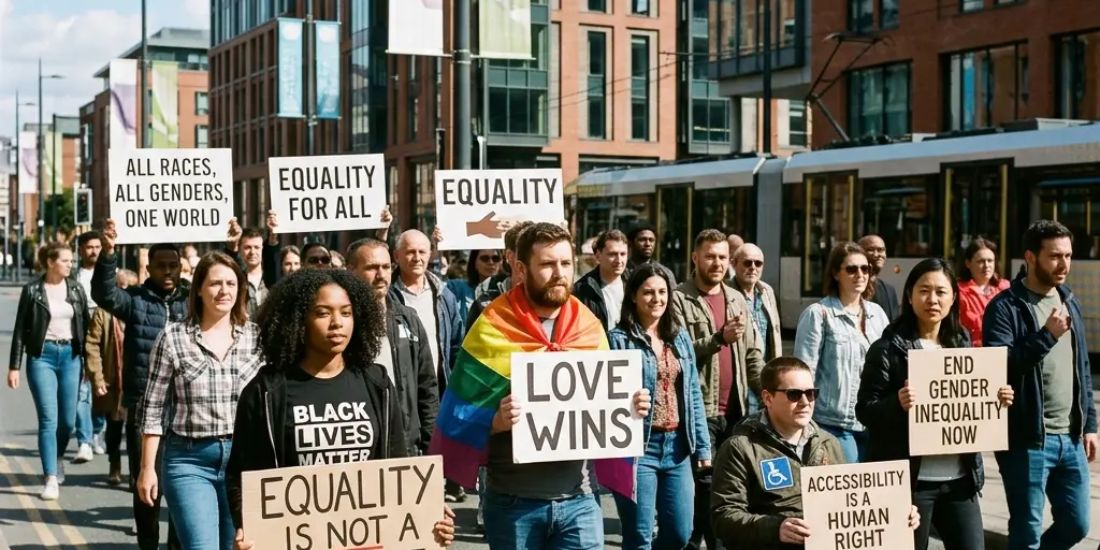
Equality is one of the most fundamental principles guiding human societies. It reflects the idea that all individuals deserve the same rights, opportunities, and respect regardless of their background, identity, or circumstances. Over centuries, equality has evolved from a philosophical concept into a global aspiration embedded in laws, policies, and social movements. Despite progress, achieving true equality remains a complex and ongoing challenge.
This article explores the concept of equality in depth—its definitions, historical evolution, different dimensions, present-day challenges, and the strategies required to build a more equal and just world.
Understanding Equality
At its core, equality means treating everyone fairly and ensuring that no individual or group is disadvantaged due to arbitrary factors such as race, gender, religion, or socioeconomic status. However, equality is not a one-dimensional concept. It includes several interpretations:
- Formal Equality – The idea that laws and policies should apply equally to everyone.
- Substantive Equality – Recognizes that different individuals may need different support to achieve equal outcomes.
- Equality of Opportunity – Ensures everyone has a fair chance to succeed.
- Equality of Outcome – Focuses on reducing disparities in results and living conditions.
Understanding these distinctions is essential because simply treating everyone the same does not always lead to fairness. For example, providing identical resources to people with different needs may reinforce inequality rather than eliminate it.
Historical Evolution of Equality
The concept of equality has deep philosophical roots. Ancient thinkers debated the nature of justice and fairness, but equality as a universal right gained momentum during the Enlightenment. Philosophers argued that all humans possess inherent dignity and rights.
Major milestones in the journey toward equality include:
- The abolition of slavery
- The expansion of voting rights
- Civil rights movements
- Women’s rights movements
- Labor rights advocacy
Each of these movements challenged entrenched systems of inequality and expanded the scope of human rights.
Dimensions of Equality
Equality manifests in various forms across society. Each dimension highlights specific areas where disparities exist.
1. Social Equality
Social equality refers to equal status and respect within society. It involves eliminating discrimination based on race, ethnicity, caste, gender, or religion. Social inequality often leads to exclusion, marginalization, and conflict.
2. Economic Equality
Economic equality focuses on fair distribution of wealth and resources. While absolute equality in income is unrealistic, extreme disparities can create social instability and limit opportunities for disadvantaged groups.
Key issues include:
- Income inequality
- Access to employment
- Wage gaps
- Poverty
3. Gender Equality
Gender equality ensures that individuals of all genders have equal rights, responsibilities, and opportunities. It addresses issues such as:
- Wage disparities
- Access to education
- Representation in leadership
- Gender-based violence
Despite progress, gender inequality remains a global concern.
4. Political Equality
Political equality ensures equal participation in governance and decision-making processes. This includes the right to vote, run for office, and influence policies.
Barriers to political equality include:
- Voter suppression
- Lack of representation
- Political corruption
5. Educational Equality
Education is a powerful tool for achieving equality. Equal access to quality education enables individuals to improve their socioeconomic status and contribute to society.
Challenges include:
- Unequal school funding
- Limited access in rural areas
- Gender disparities in education
Barriers to Equality
Despite global efforts, several barriers continue to hinder equality:
1. Structural Inequality
Structural inequality refers to systemic disadvantages embedded in institutions such as education, healthcare, and the legal system. These structures often perpetuate inequality across generations.
2. Discrimination and Prejudice
Bias based on race, gender, religion, or other characteristics continues to affect opportunities and outcomes for many individuals.
3. Economic Disparities
Wealth concentration among a small percentage of the population limits access to resources for others.
4. Lack of Access to Resources
Access to healthcare, education, and employment opportunities remains uneven across regions and communities.
5. Cultural and Social Norms
Traditional beliefs and practices can reinforce inequality, particularly in areas related to gender and social hierarchy.
The Role of Law and Policy
Governments play a critical role in promoting equality through legislation and public policy. Laws that prohibit discrimination and ensure equal rights are essential for creating a fair society.
Key policy approaches include:
- Anti-discrimination laws
- Affirmative action programs
- Social welfare initiatives
- Labor protections
- Equal access to education and healthcare
However, laws alone are not sufficient. Effective implementation and enforcement are equally important.
Equality vs. Equity
A common misconception is that equality and equity are the same. While equality focuses on treating everyone the same, equity emphasizes fairness by addressing individual needs and circumstances.
For example:
- Equality is giving every student the same textbook.
- Equity is providing additional support to students who face learning barriers.
Achieving true equality often requires equitable measures that account for differences in starting points.
Global Perspective on Equalit
Different countries face unique challenges in achieving equality. Factors such as economic development, cultural norms, and political systems influence progress.
Developed nations may struggle with income inequality and systemic discrimination, while developing countries often face challenges related to poverty, access to education, and healthcare.
International organizations work to promote equality through initiatives such as:
- Poverty reduction programs
- Gender empowerment projects
- Educational development initiatives
Technology and Equality
Technology has the potential to both promote and hinder equality.
Positive impacts:
- Increased access to information
- Online education opportunities
- Digital financial services
Negative impacts:
- Digital divide
- Algorithmic bias
- Job displacement due to automation
Ensuring equal access to technology is essential for reducing modern inequalities.
The Role of Education in Promoting Equality
Education is one of the most effective tools for fostering equality. It empowers individuals with knowledge, skills, and critical thinking abilities.
Key strategies include:
- Inclusive curricula
- Equal access to schooling
- Scholarships and financial aid
- Teacher training on diversity and inclusion
Education also helps challenge stereotypes and promote tolerance.
Workplace Equality
Equality in the workplace is crucial for economic and social progress. It involves:
- Equal pay for equal work
- Non-discriminatory hiring practices
- Inclusive work environments
- Opportunities for career advancement
Organisations that prioritise equality benefit from increased productivity, innovation, and employee satisfaction.
The Importance of Representation
Representation plays a vital role in achieving equality. When diverse groups are represented in leadership positions, decision-making becomes more inclusive.
Representation matters in:
- Politics
- Media
- Corporate leadership
- Education
It helps challenge stereotypes and inspire future generations.
Grassroots Movements and Social Change
Many advancements in equality have been driven by grassroots movements. These movements raise awareness, mobilize communities, and advocate for change.
Examples include:
- Civil rights movements
- Feminist movements
- Labor rights campaigns
Grassroots efforts highlight the power of collective action in addressing inequality.
Measuring Equality
Measuring equality is essential for tracking progress and identifying areas for improvement. Common indicators include:
- Income distribution
- Education access rates
- Employment statistics
- Health outcomes
- Gender parity indexes
Data-driven approaches help policymakers design effective interventions.
Challenges in Achieving Equality
Achieving equality is not straightforward. Some of the key challenges include:
- Resistance to change
- Political instability
- Limited resources
- Global economic disparities
Balancing equality with other societal goals, such as economic growth, can also be challenging.
The Future of Equality
The future of equality depends on sustained efforts at individual, societal, and global levels. Emerging trends include:
- Increased focus on diversity and inclusion
- Use of technology for social good
- Global cooperation on human rights
- Youth activism and engagement
Younger generations are playing a crucial role in advocating for equality and challenging outdated norms.
Practical Steps Toward Equality
Achieving equality requires action from all sectors of society. Key steps include:
1. Policy Reform
Governments must enact and enforce laws that promote fairness and protect rights.
2. Education and Awareness
Raising awareness about inequality is essential for changing attitudes and behaviors.
3. Economic Opportunities
Creating jobs and ensuring fair wages can reduce economic disparities.
4. Community Engagement
Local communities must be involved in identifying and addressing inequality.
5. Accountability
Institutions must be held accountable for discriminatory practices.
Conclusion
Equality is not just an ideal—it is a necessity for a just and prosperous society. While significant progress has been made, much work remains to be done. Achieving true equality requires a combination of legal frameworks, social change, economic opportunities, and individual commitment.
By understanding the complexities of equality and actively working toward inclusive solutions, societies can move closer to a world where everyone has the opportunity to thrive. The journey toward equality is ongoing, but with collective effort and determination, it is an achievable goal.